edrone — launching new revenue streams
Marketing Automation · SMS & WhatsApp
Senior Product Designer
2025 – 2026
SMS & WhatsApp channels — research, design, launch and lifecycle
the context
The company
edrone is an AI-powered CRM and marketing automation platform built specifically for e-commerce — covering everything from behavioural automation to multichannel campaigns. Trusted by brands like Xiaomi, Stanley and Tous, it operates across multiple markets including Poland, Brazil and Mexico. The platform's core has always been email, but at a certain point the business was ready to grow beyond it.
The challenge
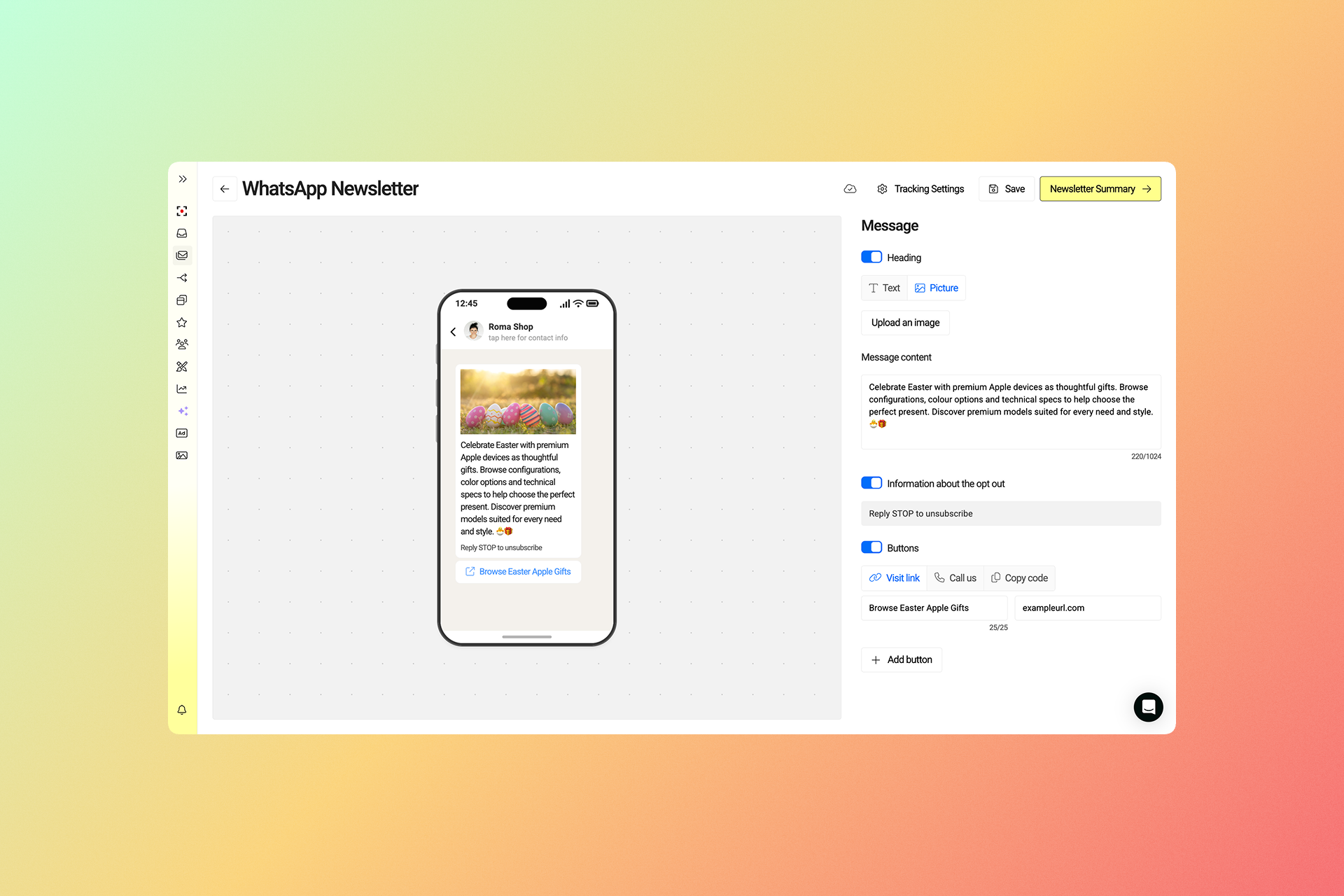
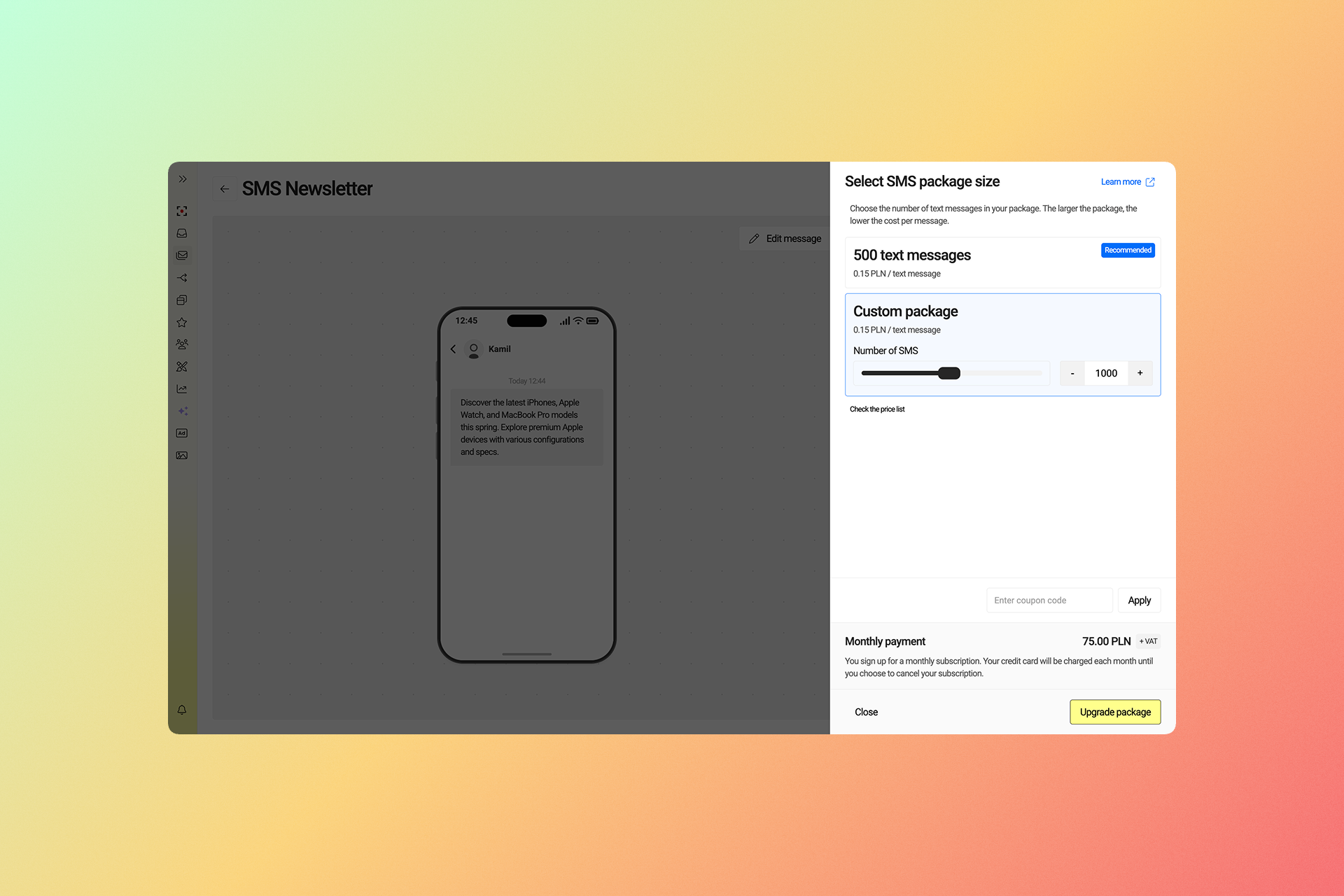
SMS and WhatsApp represented something new for edrone — not just new features, but new revenue streams. Both channels were to be offered as separately paid packages, which meant the design had to do more than just work well. It had to feel like a natural extension of a platform users already knew, while being compelling enough to convert existing customers into paying for something extra.
my role
I owned this project end-to-end — from competitor research through design, launch oversight, and long-term iteration. After go-live I stayed involved through promotional campaigns, support syncs and incremental improvements based on real user behaviour.
the process
competitor research
Before opening Figma, I mapped how other marketing platforms handle SMS and WhatsApp — how they structure credit-based pricing, how they present channel configuration, how they handle messaging limits and sender setup. The goal was to understand what users coming from other tools would already expect, and where edrone could do it better.
design
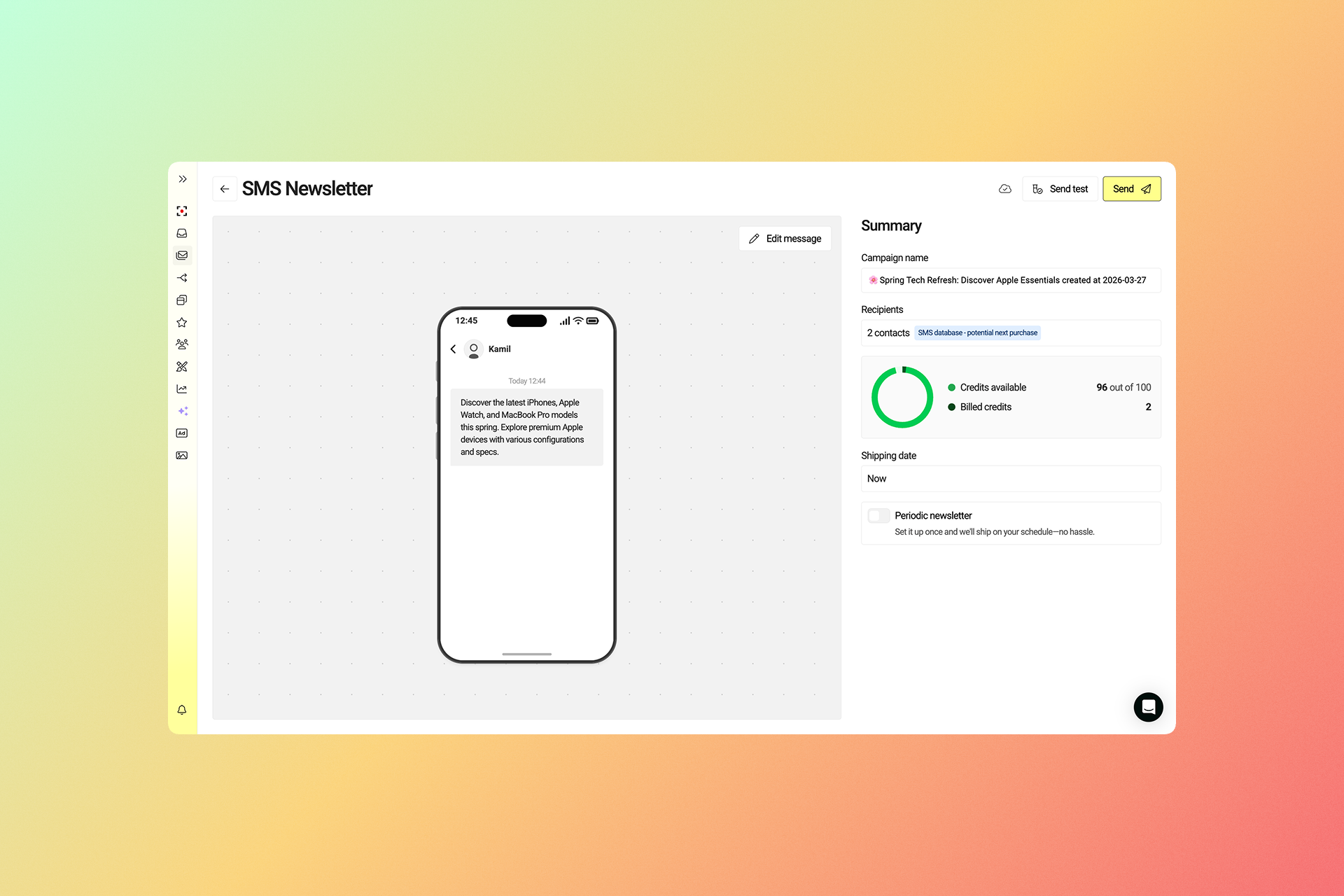
The main design challenge was integration — SMS and WhatsApp had to feel at home inside a platform built around email, not bolted on. I worked within the existing design system to create channel configuration flows, message composers and reporting views that were consistent with what users already knew, while accounting for the specific constraints of each channel — character limits, template approval flows for WhatsApp, credit management for SMS.
launch & implementation oversight
I worked closely with the development team through implementation to make sure what shipped matched what was designed. I worked closely with the development team through implementation to make sure what shipped matched what was designed.
lifecycle & iteration
The work didn't stop at launch. I ran promotional campaigns to drive adoption, monitored how customers were actually using the new channels, and maintained a regular feedback loop with the support team. When patterns emerged — users running into the same friction points, questions that kept coming up — I used that signal to prioritise improvements.
impact & results

New revenue streams
SMS and WhatsApp launched as paid add-ons — two new revenue lines for a platform that had previously monetised through email only. Designed and shipped from scratch within the existing product.
Adoption
SMS saw strong organic traction — around 80% of customers use the channel, though only about 30% have activated the paid package, which points to clear upsell potential still on the table. WhatsApp adoption sits at roughly 15%, reflecting both the channel's newer status and the higher setup threshold for businesses. Both numbers give us a concrete baseline to design against going forward.
Continuous improvement
Staying close to the product after launch — through support feedback, usage data and regular iterations — meant the channels kept improving rather than stagnating.