Racing Unleashed — building a platform from scratch
Sim Racing Management Software
UX/UI Designer
2022 - 2024
Management platform
the context
The company
Racing Unleashed has grown into a network of premium sim racing lounges across Switzerland, Germany and Spain — with locations in Zurich, Cham, Munich and Madrid, plus a franchise model expanding the footprint further. Their simulators are developed in Maranello, Italy, and the brand is an official motion simulator partner of McLaren Racing. It's a serious operation — and it needed software to match.
The problem
With multiple lounges across three countries, each with its own staff, booking flows and operational quirks, off-the-shelf tools were showing their limits fast. Managing sessions, tracking simulators, handling support across locations — none of it worked well enough out of the box. Racing Unleashed needed a platform built around how they actually operate, not one they had to constantly work around.
my role
- —Only designer on the project, working directly with the dev team from day one
- —Ran requirements workshops with stakeholders and turned operational chaos into clear product decisions
- —Built the design system from scratch — components, patterns, documentation — starting from nothing but brand colors and fonts
- —Scope grew over time to include the customer-facing booking website and a series of iterative feature improvements
the process
wireframes
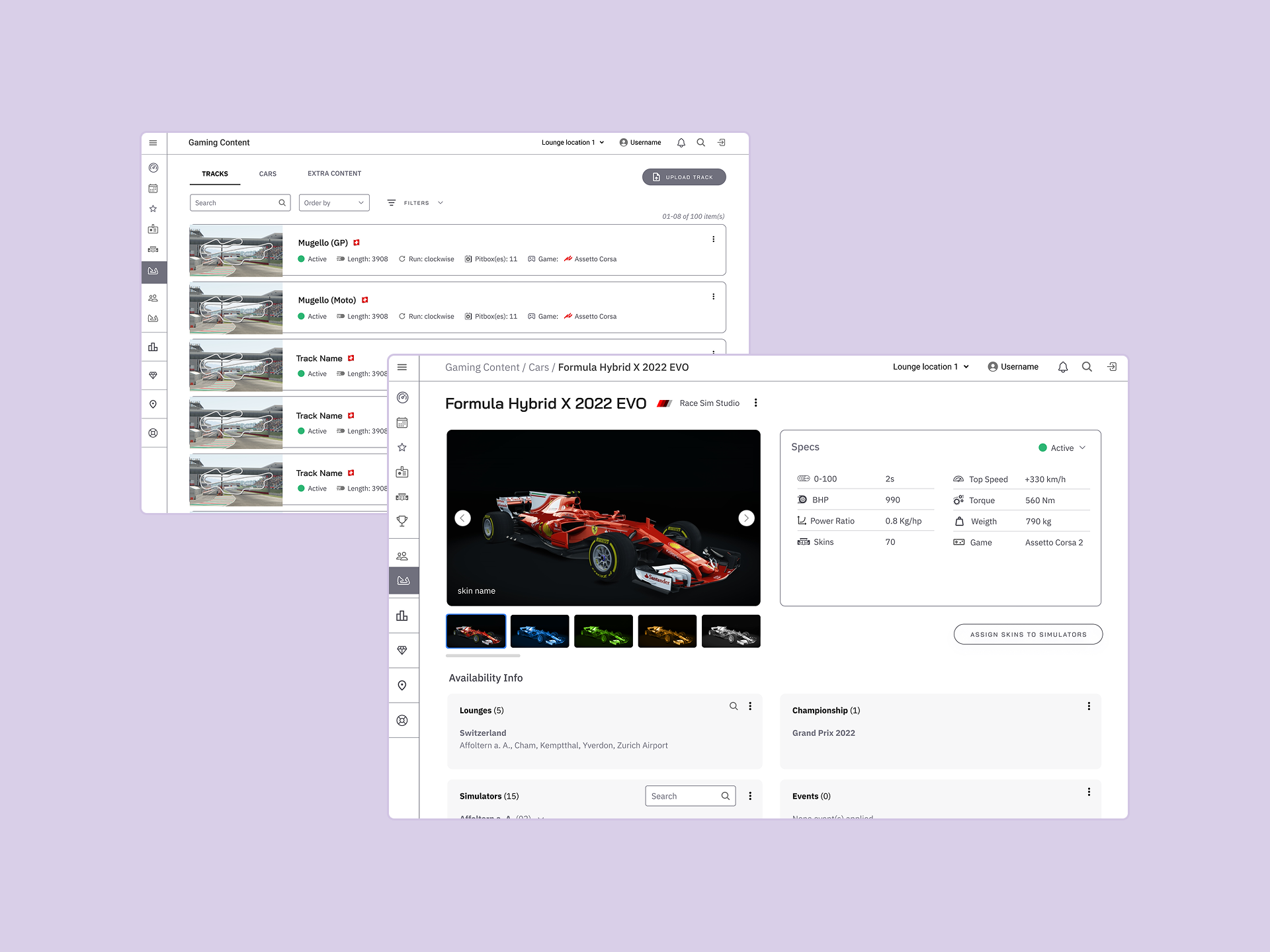
Given the platform's complexity, I started with low-fidelity wireframes to map out information architecture and core user flows. This allowed early validation with stakeholders before committing to visual design decisions.
usability testing
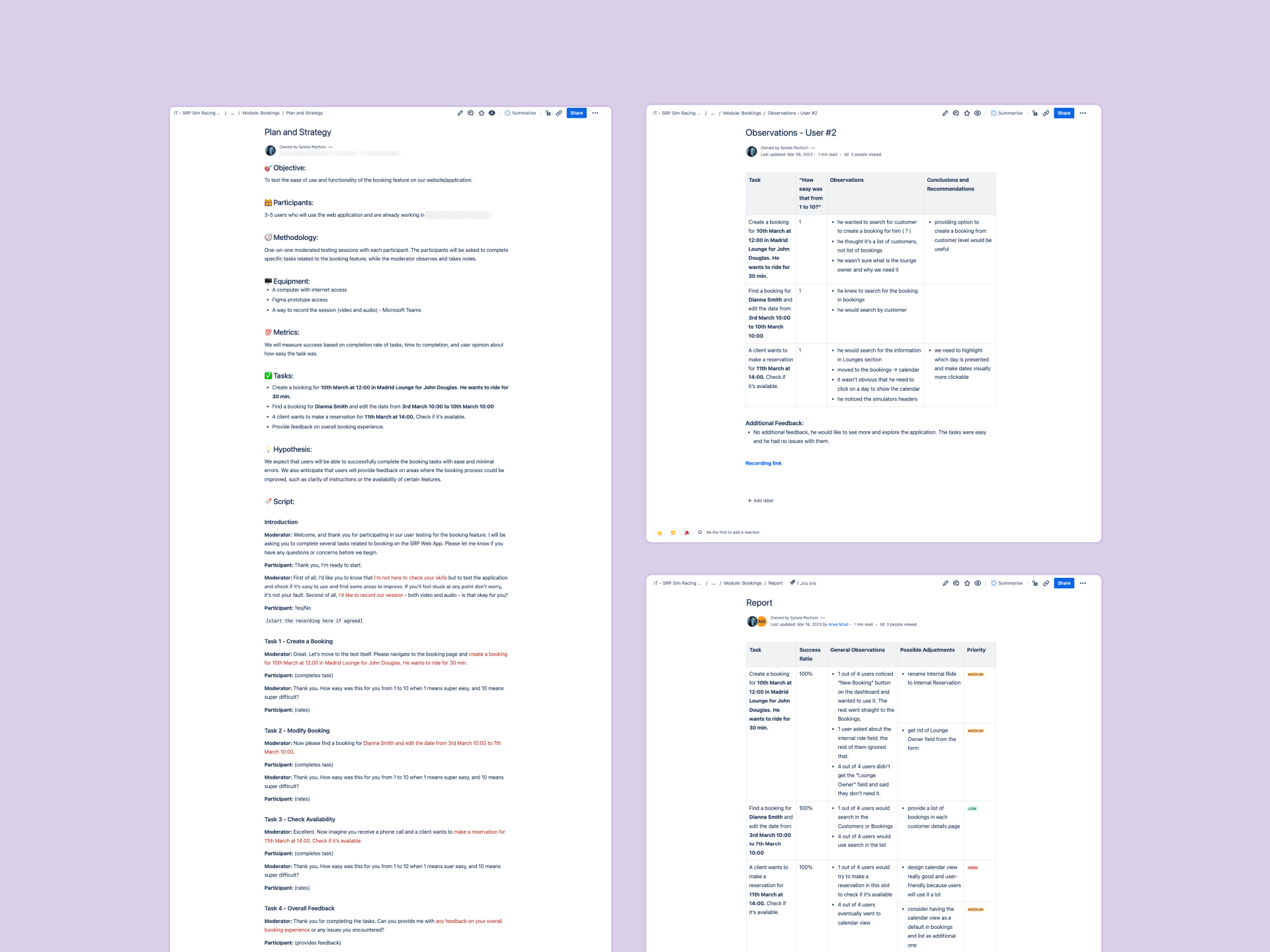
I conducted usability testing sessions with actual staff members from different locations. This surfaced workflow assumptions that looked fine on paper but didn't hold up in practice — and shaped several key design decisions before a single line of code was written.
design system
Built a scalable component library on top of an established UI framework — a deliberate call made together with the dev team to move faster without creating technical debt. Every component was documented and designed with future growth in mind, not just the immediate scope.
ui design
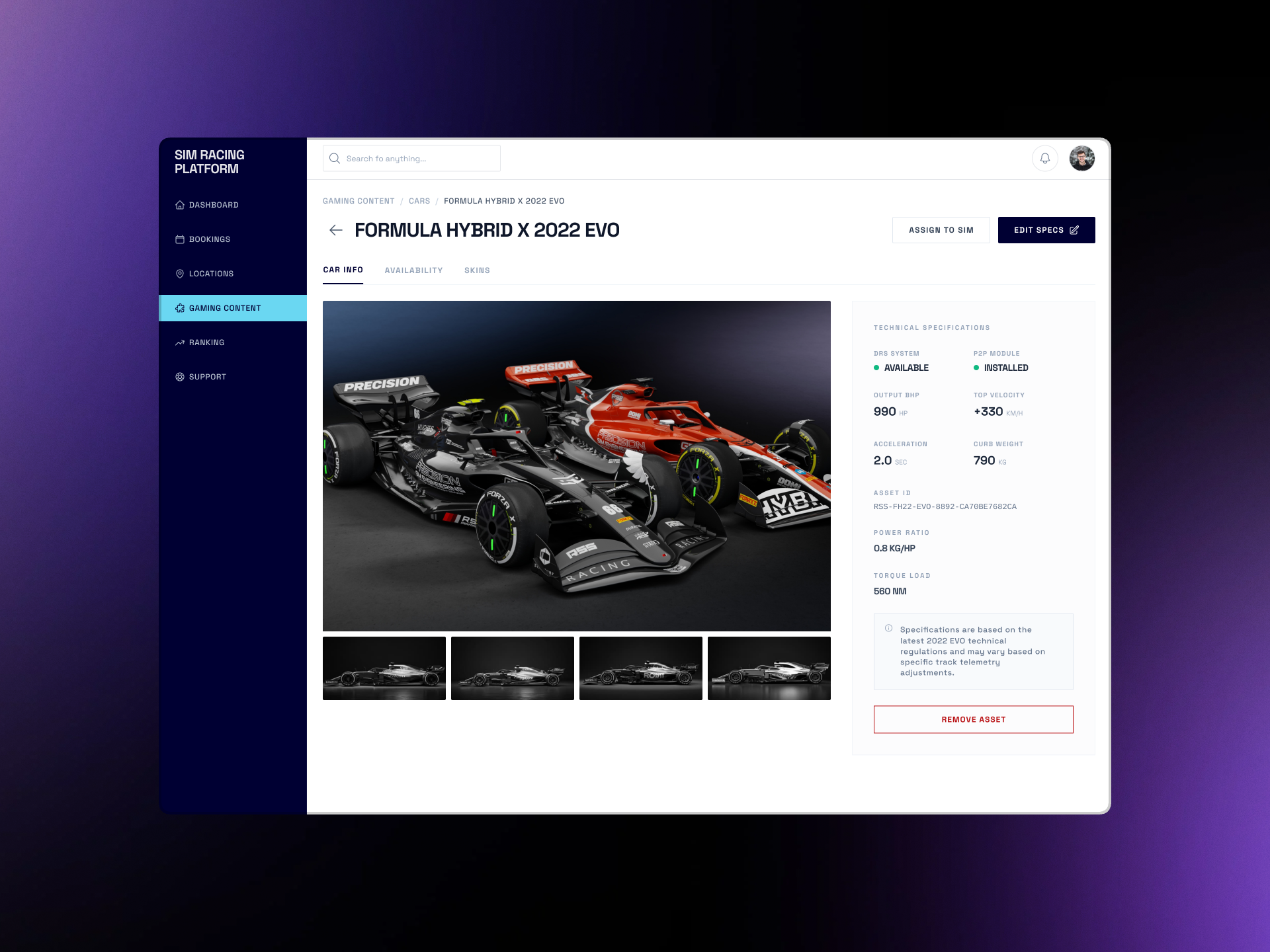
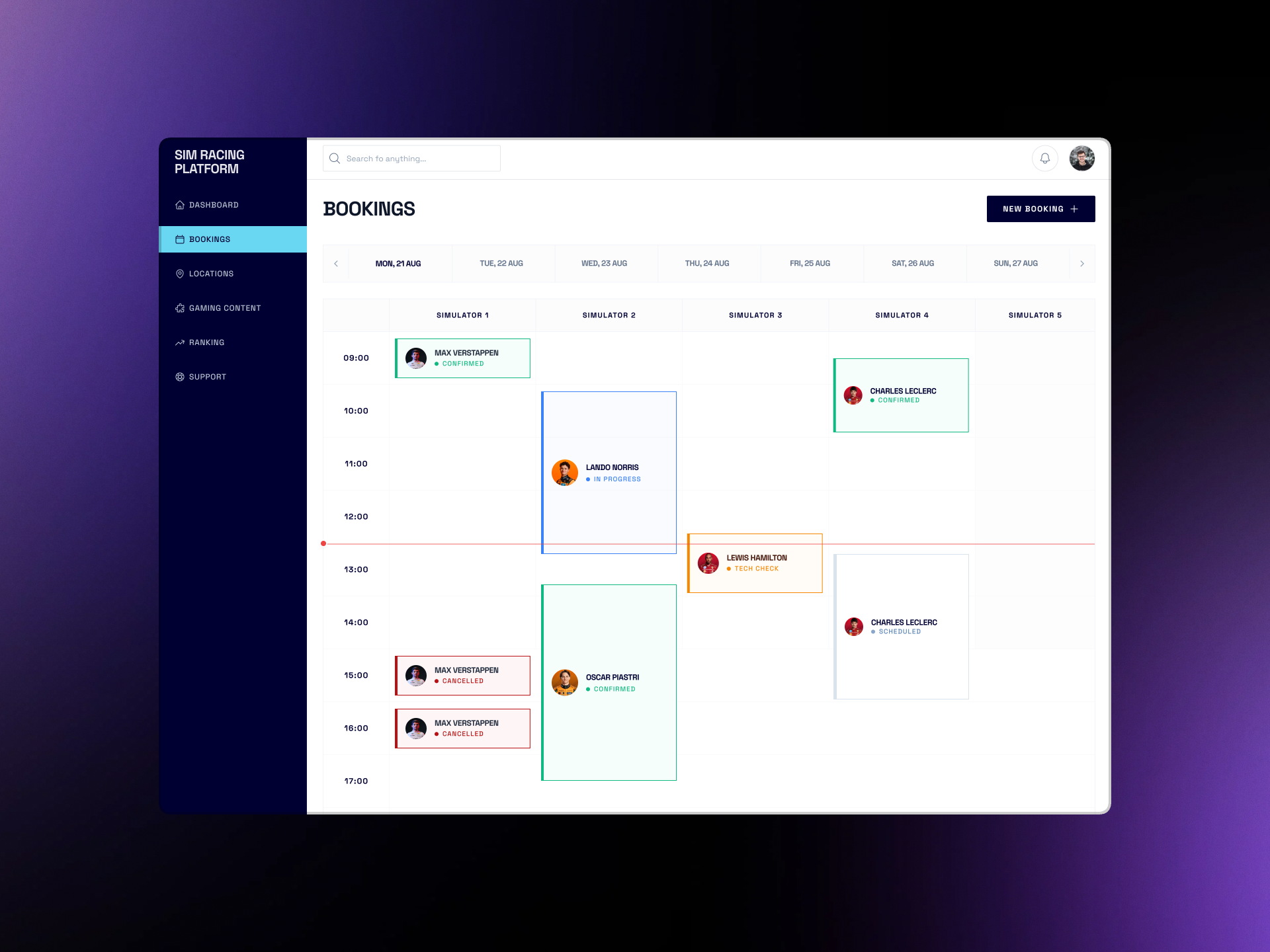
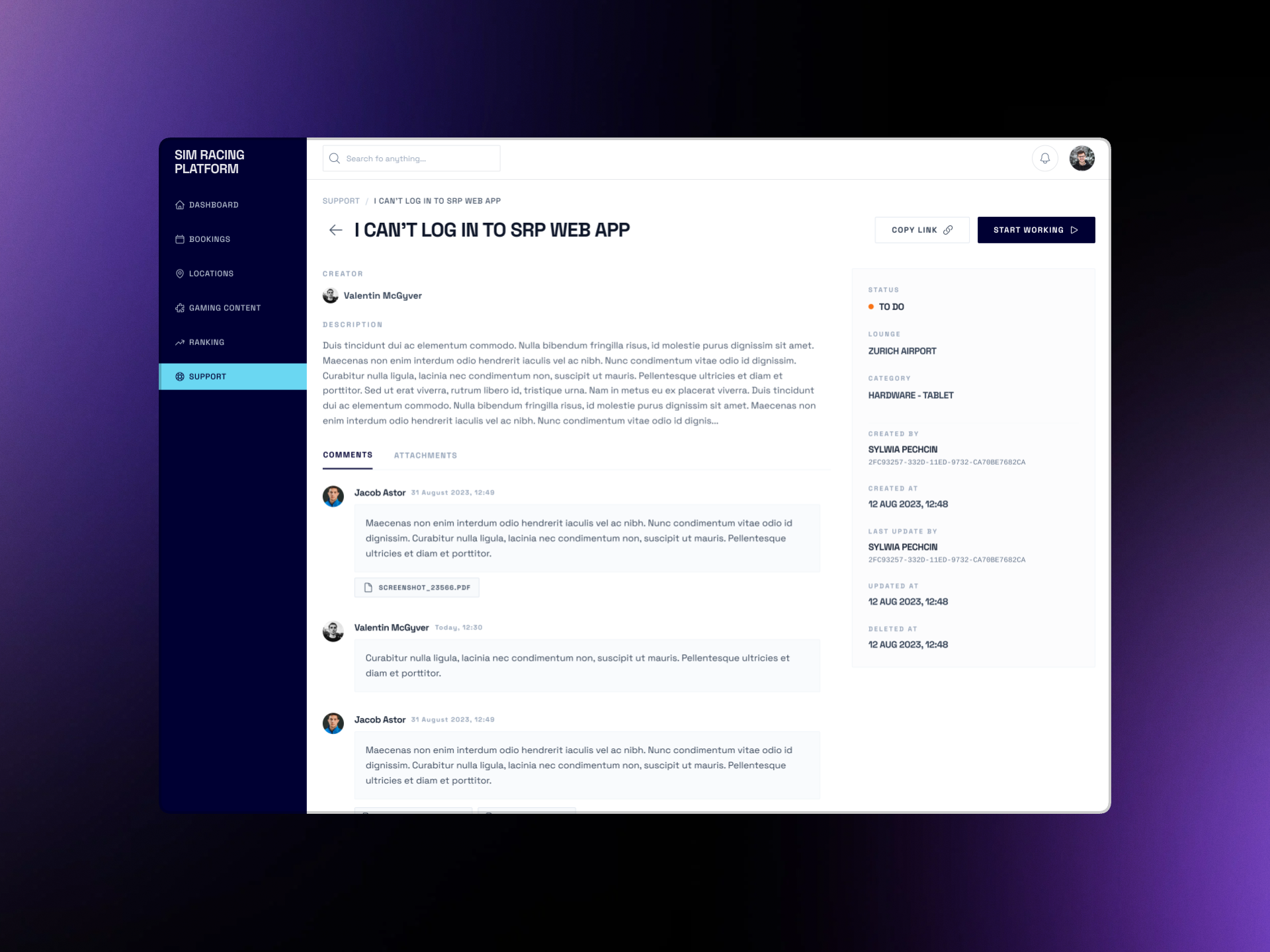
With validated wireframes and a component library in place, high-fidelity design became an exercise in composition. I focused on ensuring visual consistency across all modules while maintaining the flexibility needed for future feature expansion.
responsive adaptation
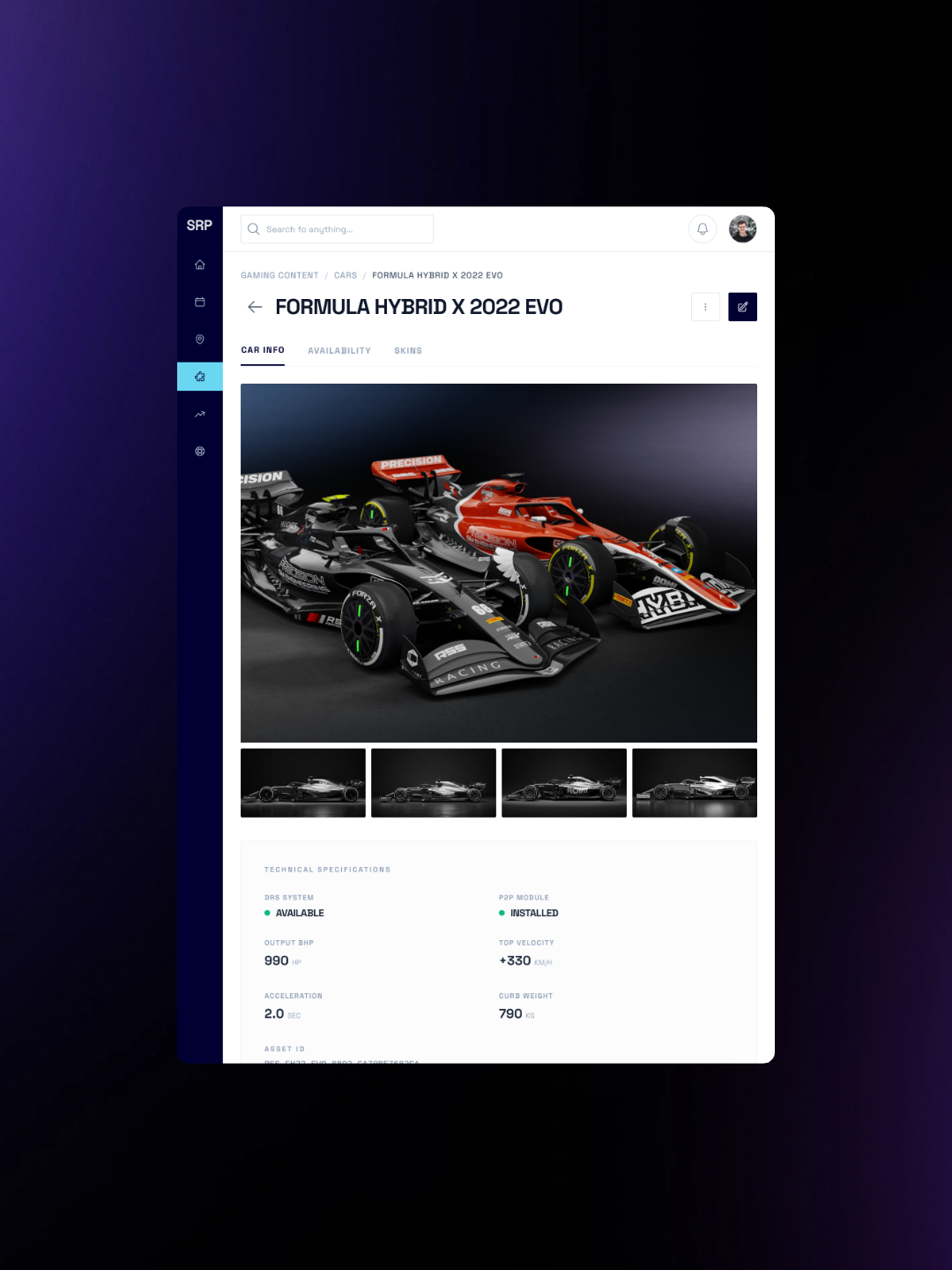
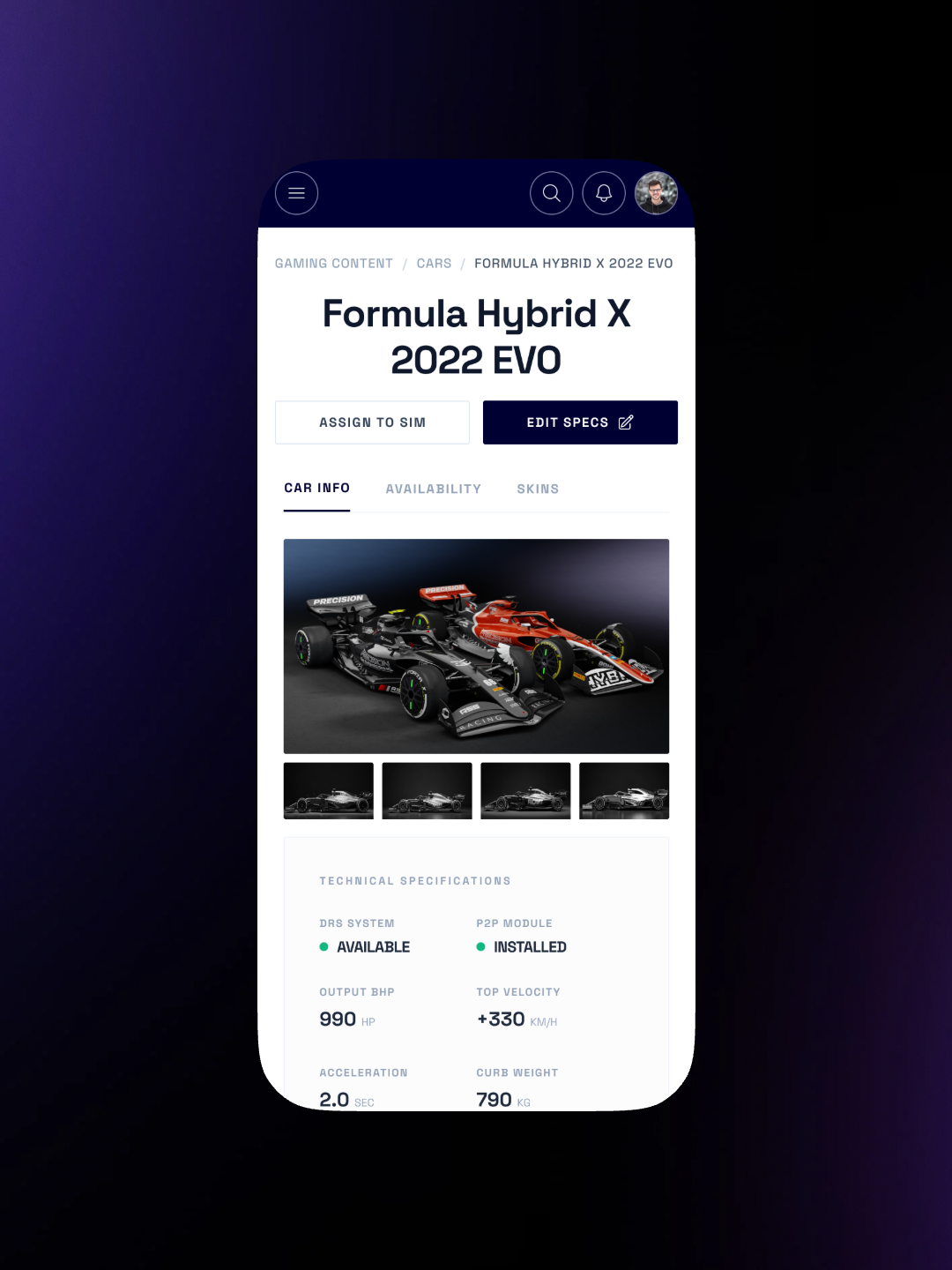
While desktop remained the primary use case, I ensured the platform remained accessible on tablets and mobile devices. This required designing two additional breakpoints with adapted navigation patterns and information density.
impact & results

Validated by users
The platform rolled out across all lounges with very little post-launch friction — which honestly was the goal from the start. Embedding usability testing throughout the process meant most issues were caught long before anything went live.
Scope expansion
What started as a single platform project turned into two years of collaboration. As the product matured, the scope expanded — booking system, new features, ongoing iterations. A good sign that the foundation was solid enough to keep building on.
A full-time offer
The project ended with a full-time offer from the client — which felt like a pretty clear signal that the work actually made a difference. Design wasn't just a service here, it was part of how the business moved forward.